Kitchen Cabinets Austin, TX
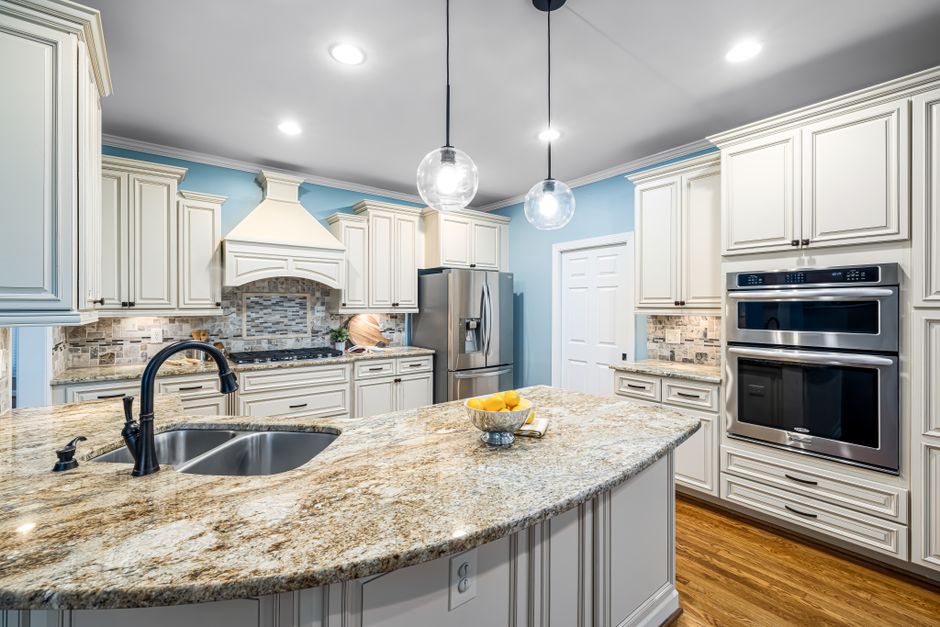
Notes on kitchen cabinets in Austin, TX: door styles, box construction, storage layouts and how cabinets hold up to Austin humidity.
What We Cover
- Drawers or Doors in Base Cabinets When a wide drawer stack beats a door and shelf in a base cabinet, and how the boxes and slides handle the load.
- Pantry Cabinet Layout for a Bungalow Kitchen in Hyde Park Fitting a tall pantry cabinet into the small footprint of an older Hyde Park or Clarksville bungalow kitchen.
- Plywood Box or Particleboard Box in Austin Humidity What separates a plywood cabinet box from a particleboard box when a kitchen sees damp summers and dry winter air in Austin.
- Shaker, Slab or Inset Doors for an Austin Kitchen How shaker, slab and inset cabinet doors differ in build, reveal and upkeep in an Austin kitchen with big humidity swings.
- Soft-Close Hinges and Drawer Slides That Last Which soft-close hinge and drawer slide details hold up through years of heavy daily use and Austin heat and damp.
- Toe Kicks and Cabinet Bases on Austin Slab Floors Why the toe kick and base platform matter on Austin slab and shifting clay soils, and how they keep boxes dry and level.
Kitchen Cabinets Austin, TX
Kitchen cabinets in Austin take more punishment from the weather than most people expect. A box built in a dry shop meets a July kitchen near Lady Bird Lake, and the wood answers by moving. From the crew's side of the job, the first questions are always the same: what is the box made of, how does the door sit on it, and what holds it all up.
Construction before style
A plywood box and a particleboard box can wear the same door and look alike on delivery day. The difference shows around the sink and the dishwasher, where damp edges swell and screws lose their grip. Doors come second. A shaker, a slab door and an inset door each tolerate seasonal swelling differently, and the overlay decides how much gap a door has to hide.
Storage layout that works in a real kitchen
A pantry cabinet, a corner base and a wide drawer stack each answer a different problem. In the smaller older kitchens of Hyde Park, Clarksville and Tarrytown, a tall unit has to earn its place against the counter run. Newer kitchens in Mueller and near Zilker Park have more room and usually benefit from drawers over doors for pots and plates.
Floors, humidity and the long run
Austin kitchens sit on slabs that move with the clay soils east of the Balcones Fault, and the air swings from soaking summers to dry winters. A toe kick on a level platform keeps the box off the floor, and a euro hinge with three adjustments lets the doors be set again each season. Good hardware and a sealed box matter more than the finish color.
Guides
The pages here cover door styles, box materials, hinges and slides, pantry planning, drawer layouts and floor-level bases for kitchens in Austin, TX. The articles go further into choosing and living with cabinets in a climate that never stays still.
Latest Guides
Cabinet Finishes That Handle Austin's Humidity Swings
2026-10-06
Finish is the first thing anyone notices about a cabinet and the last thing most people research. In Austin the choice carries more weight than it does in a dry climate, because a kitchen here goes through a long, wet summer, a short dry winter and a few spring weeks when the air changes by the hour. Finish is the skin that decides how much of that change reaches the wood. These are the questions that come up most often when a homeowner is choosing between paint, stain, thermofoil and the other options, answered the way a finisher would answer them at the bench.
Why does Austin humidity matter for a cabinet finish?
Wood takes on moisture from the air and gives it back, and it does so unevenly. A door gains moisture across its width far more than along its length, which is why a wide panel cups and a narrow rail only grows a little. A finish does not stop that movement. It slows it and spreads it out, and a good one stays flexible enough to follow the wood without cracking.
In a house near Lady Bird Lake or along the Colorado River the summer air sits heavy for months. In a drier part of Travis County toward the Texas Hill Country the same kitchen would see a faster swing between wet and dry weeks. Either way the finish needs to cover every surface, including the back of the door and the edges, because moisture goes in wherever the coating is thin.
Is paint or stain the better choice for a humid kitchen?
Neither wins outright. Paint forms a film that hides the wood and sits on top of it. A catalyzed or conversion coating cures hard and resists steam and grease well, but a hairline can open along the joint of a shaker door when the frame moves in winter. That line is cosmetic, and a touch-up brush closes it. Stain soaks in and shows the grain, and it is usually protected by a clear topcoat. A stained maple, oak or birch door shows wear less than a painted one, since scratches and small dings blend into the grain.
In older Hyde Park and Clarksville houses paint is the usual pick, because the kitchens are small, the walls are uneven and a painted frame hides a lot of small joints. Stain is more common where the wood species is the point of the room, and the grain is wanted in view.
How do thermofoil and melamine hold up?
Thermofoil is a vinyl skin pulled over a shaped mdf core with heat and vacuum. It is smooth, uniform and easy to wipe, and it is a common choice for a slab door or a simple raised panel. Its weak spot is heat. A door beside a range or above a toaster oven can see the skin lift at the edge, and once it starts to peel it cannot be glued back well. In a hot Austin summer the surface temperature near the oven climbs even when the oven is off.
Melamine is a resin-soaked paper bonded to particleboard or plywood. It is tough on the flat and shows its weakness only at cut edges, where the core can swell if water gets in. For the inside of a box, a melamine finish on plywood is a sensible choice. On a door that gets wiped with a wet cloth every day, it deserves closer inspection of the edge banding.
Which doors take refinishing well?
Solid hardwood frames with a painted or stained finish can be sanded back and recoated, usually more than once. That makes them the best candidate for a kitchen that will be lived in for decades. Mdf slab doors with a sprayed finish can also be recoated, though a deep gouge needs filler. Thermofoil cannot be refinished at all; the door is replaced. When the boxes are sound and only the look is tired, refacing, which is new doors and drawer fronts over the existing carcass, is often more sensible than starting over.
What preparation matters most before a finish goes on?
Raw wood needs sanding to a consistent grit, because a coarse scratch will show through paint and a fine one will refuse stain. Mdf edges need sealing, since they drink the first coat. Every surface, front and back, should be coated on the same day or close to it, so the door sees the same moisture on both faces. A door painted on only one side will cup as the unfinished side swells and shrinks with the weather.
Shop conditions count too. A finish applied in a damp garage can trap moisture under the film and blush white as it dries. Good shops control the air, and a finisher who says they will wait for a drier day is doing the job correctly.
How can a homeowner judge the quality of a finish?
Check the edges and corners first. A good finish is even at the profile of the door, where it is hardest to spray, and does not pool in the inside corner of a shaker frame. Run a fingertip along the bottom edge of a door, where steam and splashes land. It should feel as smooth as the face. Open a drawer and look at the inside; a drawer box with a clear coat on dovetails is a sign the shop finishes all the surfaces, not only the ones on display.
Ask about the hardness of the coating after it cures. A fully cured finish resists a fingernail, while a finish that is still soft after a week leaves marks from a coffee mug. Cure time is not the same as dry time, and a cabinet that is installed too soon can stick to the shelf paper or the adjacent door.
How should finished cabinets be cleaned in humid weather?
A soft cloth, warm water and a little mild soap are enough on most finishes. Strong degreasers and abrasive pads cut through the topcoat in spots, and those spots become the places where moisture gets in. Wipe cabinet fronts dry rather than leaving beads of water to sit, especially around the sink base, the dishwasher and the doors near the range. A towel hung over the oven door handle can drip onto the finish below it, and that is a small habit that adds up over a year.
In summer, running the air conditioner and keeping the kitchen exhaust fan on during cooking cuts the amount of steam that settles on the doors. The kitchens that stay in good shape are the ones where the room itself is kept in balance, in Tarrytown or Mueller as anywhere else, not the ones with the thickest coating.
When does a finish need attention?
Dull patches at the edges of door handles, a tacky feel near the stove and a visible line at the frame joints are the three early signs. A dull patch can often be buffed back with a polish made for the finish. A tacky patch means grease has built up and needs a gentle cleaner. A joint line that opens each January and closes in July is normal wood movement, not a failed finish.
A finish that has cracked into flakes, or a door where the skin has lifted from the core, is past touching up. At that point the finish is protecting nothing, and the choice is between recoating a solid door and replacing a laminate one.
Does the box need a finish too?
The inside of the box does, and it is often skipped. A plywood box with a sealed interior and sealed edges at the sink base handles a leak far better than a raw one. A single coat of clear finish on the bottom panel, the underside of the sink shelf and any cut edge near plumbing takes minutes and adds years of life to the cabinet. Austin's hard water leaves white mineral rings on raw wood under a leaking fitting, and a sealed panel wipes clean.
The finish is a layer, and the box, hinges and slides behind it do most of the work. Pick the coating for the room and the way it is used, then let the construction beneath do its part.

Planning Kitchen Cabinet Storage by Zone
2026-10-06
Most kitchen storage problems are not about running out of space. They come from putting things in the wrong place: the colander two rooms away from the sink, the cutting boards behind the stand mixer, the everyday plates on a shelf that needs a step stool. Planning storage by zones, the way a crew lays out a job, fixes most of that before a single box is ordered. This walk-through goes around an Austin kitchen from the sink outward and says what belongs where and which cabinet type suits each spot.
What belongs around the sink and the dishwasher?
Every kitchen has one cleaning zone, and it sets the pattern for the rest. The sink base is almost always a door cabinet, because the drain and supply lines take the middle of the box. Keep that cabinet for cleaning products and a trash pull-out if the box is wide enough, and seal the bottom panel and cut edges, since this is the cabinet that gets wet first. Austin summers add damp air to whatever leaks.
The dishwasher is where drawers begin to pay off. A deep drawer within two steps of it holds plates and bowls, so unloading becomes a turn and a lift instead of a walk. A second drawer beside it takes glasses and mugs if the run allows, or the wall cabinet above does the same job at head height.
How should the cooking zone be arranged?
Pots, pans and lids belong beside the range, in drawers if the run allows. A wide drawer on full-extension slides lets a cook see the pan they want without lifting three others. Oils, spices and utensils belong in a narrow pull-out or a shallow drawer right at the stove, within one reach of where the work happens. Baking sheets and cutting boards stand on edge in a vertical divider, which is a cabinet about six inches wide that takes little floor space and saves a lot of stacking.
Heat matters here. A cabinet above or beside the range sees more heat than the others, so the finish and the hinge are both worth a closer look. A soft close hinge with a small piston will wear faster near a range hood than one beside the refrigerator.
Where does a pantry earn its footprint?
A pantry cabinet is the one place where a tall unit earns its footprint. A pull-out pantry eighteen inches wide shows every shelf from the side. A swing-door pantry, twenty-four inches deep, hides the back rows unless the shelves are shallow or the door carries racks. In a small older kitchen in Hyde Park, Clarksville or Travis Heights, a pantry unit can take more counter than the room can spare, and a wall of shallow cabinets or a freestanding piece in the hall can be the better answer.
Keep the heaviest items low. A shelf of canned goods is a real load, and it sits best on a plywood shelf with a front edge band so it does not bow over time.
Which cabinet type suits which storage job?
Storage job Best cabinet type What to check Pots and pans Wide drawer stack Slide load rating, dovetail or doweled drawer box Plates and bowls Deep drawer near the dishwasher Full extension, soft close Cleaning products Sink base with doors Sealed bottom panel and cut edges Spices and oils Narrow pull-out beside the range Heat exposure on the hinge or slide Dry food Tall pantry with shallow shelves Shelf thickness, door hinge count Small appliances Door base or appliance garage Clearance for the lift-up door Baking sheets and boards Vertical divider Cabinet width and slot spacing What do you do with the corners?
The corner base is the hardest piece of floor space in the kitchen to use well. A blind corner with a swing-out tray gets some of it back. Two drawer stacks that meet at a filler waste less, provided the fronts clear each other. A lazy susan turns the dead space into a round shelf, though the pivot hardware takes a lot of use and should be a solid piece. A face frame cabinet needs a wider stile at the corner; a frameless box can place the units closer.
Corners on the upper run are easier. A diagonal wall cabinet or a simple open shelf is often enough, and it keeps heavy doors from swinging into each other.
How high should the upper cabinets go?
An upper cabinet is useful up to about the height of an outstretched hand. Everything above that is for items used a few times a year: a roasting pan, the holiday platters, a spare set of glasses. Crown molding and tall uppers look good but turn the top shelf into an attic. In a kitchen with a nine foot ceiling, a short run of glass-front uppers at the standard height with open space above is often more useful than a wall of doors to the ceiling.
Lighting and outlets belong in the same conversation. A wall cabinet with an under-shelf light makes the counter below it a real work surface, and an outlet placed inside an appliance cabinet lets a mixer or toaster oven stay plugged in behind a lift-up door. Both are easy to plan early and awkward to add once the drywall is closed up.
How does the layout affect moisture?
Storage layout and humidity are connected more than people expect. A kitchen in Austin that keeps dry food in a pantry near the exterior wall, or next to a window that sweats in July, will see the shelf paper curl and the boxes of cereal go soft. The drawer closest to the dishwasher catches steam when the door opens at the end of a cycle. Place wooden cutting boards and bread boxes away from that zone.
Slab floors add another factor. A kitchen on a slab near Bouldin Creek or Mueller is one where the toe kick and the bottom shelf see the most moisture. Keep paper goods and cloth off the bottom shelf of the base cabinets, and use a plastic bin for anything that must go there.
How do you put the plan on paper?
Before any box is ordered, draw the room to scale and mark the sink, the range, the refrigerator and the dishwasher. Draw a triangle between the first three and note where the traffic runs. Put the zones around them: cleaning at the sink, cooking at the range, food storage near the refrigerator. Then place drawers where weight and frequency are highest, and doors where a tall or awkward item needs room. Walk through a normal dinner in your head, from the first pan to the last plate, and see where you pause. Those pauses are where the layout needs another look.
A layout is easy to change on paper and hard to change once the boxes are installed. Spend the time there.